
BMW X3 Maintenance Schedule: A Comprehensive Guide
Maintaining your BMW X3 requires diligent adherence to a schedule, often found within a BMW X3 maintenance schedule PDF; preventative care ensures longevity and peak performance.
Understanding BMW X3 Maintenance Intervals
BMW X3 maintenance intervals are not strictly mileage-based; they consider both time and kilometers driven, typically 24 months or 30,000 km, whichever comes first, as detailed in the BMW X3 maintenance schedule PDF. Regular checks every 5,000-10,000 miles cover essential fluids, brakes, and tire conditions. Intermediate services at 10,000-15,000 miles involve more detailed inspections of the brake system, coolant, and air filters.
Major services, around 30,000 km (or 24 months), necessitate oil changes using BMW LL-01 specified oil, spark plug replacements, and fuel filter changes. Extended maintenance at 75,000 miles includes transmission and differential fluid changes, alongside a complete coolant flush. Service codes, like S8KB, indicate specific interval settings. Accessing the official PDF provides a precise, model-year-specific breakdown of these intervals.
Importance of Following the Schedule
Adhering to the BMW X3 maintenance schedule, outlined in the BMW X3 maintenance schedule PDF, is crucial for preserving vehicle reliability and resale value. Consistent maintenance prevents minor issues from escalating into costly repairs, safeguarding your investment. Following the recommended intervals ensures optimal engine performance, efficient fuel consumption, and the longevity of critical components like the transmission and brakes.
Neglecting scheduled services can void warranty coverage and compromise safety features. The PDF details specific oil requirements (BMW LL-01) and fluid specifications, vital for maintaining engine health. Proactive maintenance, as detailed in the schedule, minimizes the risk of breakdowns and unexpected expenses, offering peace of mind and a consistently enjoyable driving experience. Ignoring the schedule can lead to premature wear and tear, diminishing the X3’s overall lifespan.
Accessing the BMW X3 Maintenance Schedule PDF
Obtaining the official BMW X3 maintenance schedule PDF is straightforward. Visit the BMW USA website and navigate to the support or owners’ section. Search for your specific X3 model year (G01) to locate the corresponding maintenance booklet. Alternatively, authorized BMW dealerships can provide a physical copy or email a digital version. Several online BMW forums and enthusiast websites also host downloadable PDFs, though verifying the document’s authenticity is essential.
Ensure the PDF you download corresponds to your X3’s production date and engine type (e.g., 3.0 gasoline). The document details service intervals, fluid specifications (like 0W-40), and recommended procedures. Utilizing the official BMW PDF guarantees accurate information and prevents reliance on potentially inaccurate third-party sources. Regularly referencing this document will help you stay on top of your vehicle’s maintenance needs.

Regular Maintenance Tasks (5,000 — 10,000 Miles)

Essential tasks within this range include oil and filter changes, tire rotations, brake inspections, and topping off all vital fluid levels consistently.
Oil and Filter Change
Regular oil and filter changes are paramount for your BMW X3’s engine health, typically recommended every 5,000 to 10,000 miles, though this can vary based on driving conditions and the oil specification. BMW often specifies BMW LL-01 approved oils, such as 0W-40 or 5W-40, ensuring optimal lubrication and protection. Using the correct viscosity is crucial.
The oil service interval can be extended to 24 months or 25,000 km with certain oil types (S8KB service code). A quality oil filter is equally important, removing contaminants and maintaining oil cleanliness. During an oil change, inspect for any leaks and ensure proper oil level according to the dipstick. Documenting these changes is vital for maintaining your X3’s service history and warranty compliance. Ignoring this can lead to significant engine damage over time.
Tire Rotation and Inspection
Consistent tire rotation and inspection are essential for even wear and maximizing tire lifespan on your BMW X3. Recommended every 5,000 to 10,000 miles, rotation patterns vary depending on whether your X3 is all-wheel drive or rear-wheel drive – consult your BMW X3 maintenance schedule PDF for specifics.
During inspection, check tire pressure (including the spare, if equipped) and adjust to the manufacturer’s recommended levels. Examine tread depth using a tread depth gauge; tires should be replaced when they reach the wear bars. Look for any signs of uneven wear, bulges, cuts, or embedded objects. Proper tire alignment is crucial to prevent premature wear. Addressing tire issues promptly enhances safety, fuel efficiency, and overall driving performance. Ignoring these checks can compromise handling and braking.
Brake Inspection
Regular brake inspections are paramount for safety in your BMW X3, typically recommended every 5,000-10,000 miles, as detailed in your BMW X3 maintenance schedule PDF. These inspections should cover brake pad thickness; pads should be replaced when they reach their wear limit. Also, examine the brake rotors for scoring, warping, or excessive rust.
Inspect brake lines and hoses for leaks or damage. Check the brake fluid level and condition – low fluid or a dark color indicates potential issues. A detailed inspection at 10,000-15,000 miles includes checking calipers and wheel cylinders. Ignoring brake maintenance can lead to reduced stopping power, increased stopping distances, and potentially dangerous driving conditions. Prompt attention to brake issues ensures optimal performance and driver safety.
Fluid Level Checks and Top-Ups
Consistent fluid level checks are a cornerstone of BMW X3 maintenance, outlined in the BMW X3 maintenance schedule PDF, typically performed every 5,000-10,000 miles. Essential fluids include engine oil, coolant, brake fluid, power steering fluid (if applicable), and windshield washer fluid. Low fluid levels can indicate leaks or underlying issues requiring immediate attention.
Checking coolant levels ensures proper engine temperature regulation, preventing overheating. Brake fluid levels impact braking performance, while power steering fluid ensures smooth steering operation. Regularly topping up these fluids maintains optimal system function. Refer to your owner’s manual or the maintenance schedule PDF for specific fluid specifications and recommended levels. Ignoring fluid levels can lead to component damage and costly repairs.

Intermediate Maintenance (10,000 ౼ 15,000 Miles)
At this stage, detailed inspections of brakes, coolant, and filter replacements (engine & cabin) are crucial, as detailed in the BMW X3 maintenance schedule PDF.
Detailed Brake System Inspection
A comprehensive brake system inspection, outlined in the BMW X3 maintenance schedule PDF, is paramount for safety and optimal performance. This goes beyond a simple visual check, encompassing several critical components. Technicians will meticulously examine brake pad thickness, ensuring sufficient material remains for effective stopping power. Rotor condition is assessed for wear, scoring, or warping, which can compromise braking efficiency and cause vibrations.
Brake lines and hoses are inspected for leaks, cracks, or damage, as any compromise in these systems can lead to brake failure. The brake fluid level and condition are checked; fluid should be clear and free of contaminants. A brake fluid flush may be recommended based on the fluid’s condition; Calipers are inspected for proper operation, ensuring they engage and disengage smoothly. Finally, the parking brake functionality is verified. Addressing any issues identified during this inspection is vital for maintaining a safe and reliable braking system.
Coolant System Inspection
The BMW X3 maintenance schedule PDF emphasizes regular coolant system inspections to prevent overheating and engine damage. This detailed check begins with a visual assessment of all coolant hoses for leaks, cracks, or swelling – indicators of potential failure. The coolant reservoir is examined to ensure proper fluid level and to check for any signs of contamination, like rust or oil. A pressure test is often performed to identify leaks within the system that may not be visible.
The radiator cap is inspected for proper sealing, and the radiator itself is checked for corrosion or blockage. Technicians will also verify the operation of the thermostat, ensuring it opens and closes correctly to regulate engine temperature. Finally, the coolant’s condition is assessed; if it’s discolored or contains debris, a coolant flush and replacement are recommended to maintain optimal cooling efficiency and protect engine components.
Air Filter Replacement (Engine)
As detailed in the BMW X3 maintenance schedule PDF, replacing the engine air filter is crucial for maintaining optimal engine performance and fuel efficiency. A dirty air filter restricts airflow to the engine, reducing power and potentially causing increased fuel consumption. During inspection, technicians assess the filter for debris, dirt, and overall condition. Replacement intervals typically fall within the 10,000-15,000 mile range, but may vary based on driving conditions – dusty environments necessitate more frequent changes.
A new air filter ensures a clean air supply, protecting the engine from abrasive particles that can cause wear and tear. The replacement process is relatively straightforward, involving removing the old filter and installing a new one, ensuring a proper seal to prevent unfiltered air from entering the engine. Regularly replacing the air filter contributes to a longer engine lifespan and consistent performance.
Cabin Air Filter Replacement
The BMW X3 maintenance schedule PDF highlights the importance of cabin air filter replacement for maintaining a healthy and comfortable in-cabin environment. This filter cleans the air entering the vehicle’s ventilation system, removing dust, pollen, and other airborne particles. A clogged cabin air filter can reduce airflow, diminish heating and cooling efficiency, and contribute to unpleasant odors. Replacement is generally recommended around the 10,000-15,000 mile mark, or annually, but more frequent changes are advised for those driving in polluted areas or with allergies.
Replacing the cabin air filter is a simple DIY task, often located behind the glove compartment. A clean filter improves air quality, benefiting both driver and passengers. Ignoring this maintenance item can lead to reduced visibility due to fogging and potential health concerns. Consistent replacement ensures optimal HVAC system performance and a pleasant driving experience.

Major Maintenance (Around 30,000 km / 24 Months)
The BMW X3 maintenance schedule PDF details crucial services at this interval, including oil changes using BMW LL-01 specification fluids, spark plug, and fuel filter replacements.
Oil Service Interval – BMW LL-01 Specification
The BMW X3’s oil service interval, as detailed in the official maintenance schedule PDF, is critically linked to the BMW Longlife-01 (LL-01) specification. This isn’t merely a recommendation; it’s a requirement to maintain your engine’s warranty and optimal performance. LL-01 oils are specifically formulated to protect against sludge buildup and wear in modern BMW engines, particularly those with diesel particulate filters (DPFs).
Intervals can vary based on driving conditions and the vehicle’s Service Indicator System. A typical interval is around 24 months or 30,000 km (approximately 18,641 miles), but the onboard computer monitors various factors and adjusts this accordingly. Using an oil not meeting the LL-01 specification can lead to engine damage and void your warranty. The PDF will outline acceptable viscosity grades, commonly 0W-40 or 5W-40, but always confirm the correct grade for your specific X3 model year and engine type. Always refer to the official documentation for precise details.
Spark Plug Replacement
According to the BMW X3 maintenance schedule PDF, spark plug replacement is a major service typically required around the 30,000 km (18,641 miles) or 24-month interval, though this can fluctuate based on driving habits and the vehicle’s onboard diagnostics. Worn spark plugs lead to reduced fuel efficiency, misfires, and diminished engine performance. Ignoring this service can potentially damage catalytic converters.
The PDF will specify the correct spark plug type for your X3’s engine – crucial as using incorrect plugs can cause significant issues. Replacement isn’t a simple DIY task; it requires specialized tools and knowledge to ensure proper torque and gap settings. It’s highly recommended to have this service performed by a qualified BMW technician. Regular spark plug replacement, as outlined in the maintenance schedule, contributes significantly to maintaining optimal engine health and preventing costly repairs down the line.
Fuel Filter Replacement
The BMW X3 maintenance schedule PDF details fuel filter replacement as a key component of major servicing, generally recommended around the 30,000 km (18,641 miles) or 24-month mark. A clogged fuel filter restricts fuel flow to the engine, resulting in reduced power, poor fuel economy, and potential starting difficulties. Ignoring this maintenance item can lead to more serious engine problems.
The PDF will indicate the specific fuel filter required for your X3’s engine variant. Replacement involves depressurizing the fuel system and carefully disconnecting/reconnecting fuel lines – a task best left to experienced technicians. Proper disposal of the old filter is also essential. Adhering to the recommended fuel filter replacement interval, as outlined in the schedule, ensures a clean fuel supply, optimal engine performance, and prevents potential damage to fuel injectors and the fuel pump.

Extended Maintenance (75,000 Miles)
The BMW X3 maintenance schedule PDF highlights comprehensive checks at 75,000 miles, including transmission, differential, and coolant services for sustained reliability.
Transmission Fluid Change
As detailed in the BMW X3 maintenance schedule PDF, a transmission fluid change is a critical service typically recommended around the 75,000-mile mark. This service ensures smooth gear shifting and prevents premature wear of the transmission components. The fluid itself lubricates, cools, and provides hydraulic pressure for optimal operation.
Neglecting this maintenance can lead to costly repairs down the line. The PDF will specify the correct type of transmission fluid for your specific X3 model – crucial as using the wrong fluid can cause significant damage. A qualified technician will completely drain the old fluid, replace the filter (if applicable), and refill the transmission with fresh fluid, verifying the correct level. Following the schedule outlined in the BMW document is paramount for maintaining the longevity and performance of your X3’s transmission.
Differential Fluid Change
The BMW X3 maintenance schedule PDF highlights the importance of a differential fluid change, generally recommended around the 75,000-mile interval. This service is vital for maintaining the proper operation of the differential, which distributes power to the wheels, especially important in all-wheel-drive X3 models. Old fluid degrades, losing its lubricating properties and ability to dissipate heat effectively.
Ignoring this maintenance can lead to increased friction, wear, and potential differential failure. The PDF will detail the specific fluid type required for your X3’s differential – using the incorrect fluid can cause severe damage. A technician will drain the old fluid, inspect for any metal shavings (indicating wear), and refill with fresh fluid, ensuring the correct level. Adhering to the schedule in the BMW document safeguards the differential, contributing to a smoother and more reliable driving experience.
Coolant Flush and Replacement
As detailed in the BMW X3 maintenance schedule PDF, a coolant flush and replacement is a crucial service typically scheduled around the 75,000-mile mark. Coolant, or antifreeze, prevents overheating and freezing, protecting the engine and cooling system components. Over time, coolant degrades, becoming corrosive and losing its effectiveness. This can lead to rust, scale buildup, and potential radiator or water pump failure.
The PDF specifies the correct type of coolant for your X3 – BMWs often require specific formulations. A flush removes the old coolant, along with any contaminants, and replaces it with fresh fluid. Technicians also inspect hoses and connections for leaks or damage. Regularly replacing the coolant, as outlined in the BMW document, ensures optimal engine temperature regulation, preventing costly repairs and extending the life of your X3’s cooling system.
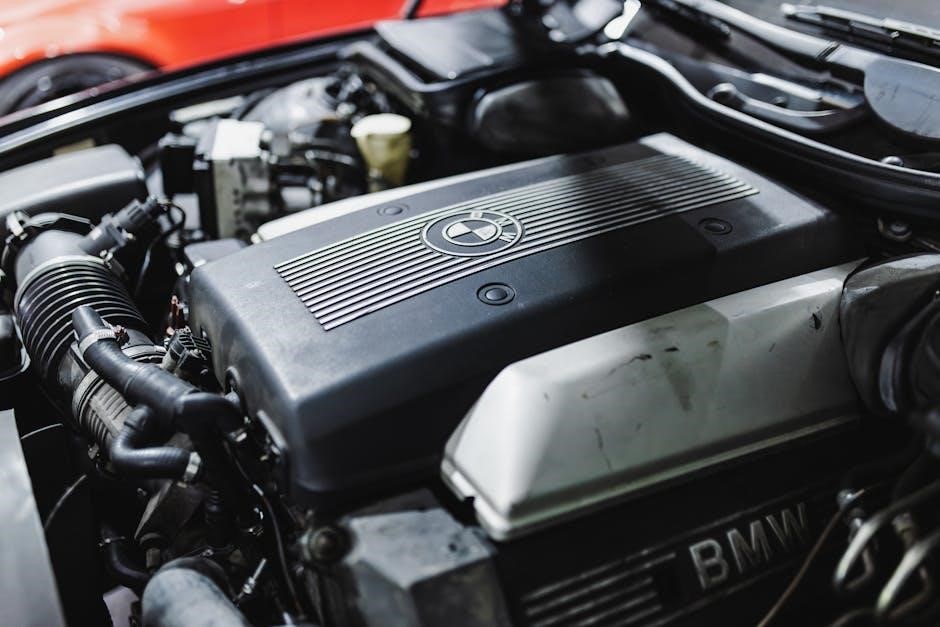
Specific BMW X3 (G01) Maintenance Considerations
The BMW X3 (G01) PDF highlights engine-specific needs and service codes like S8KB, impacting oil service intervals and requiring careful attention.
BMW X3 3.0 Gasoline Engine Specifics
Owners of the BMW X3 3.0 gasoline engine should pay close attention to the maintenance schedule outlined in the official BMW X3 maintenance schedule PDF. This engine often benefits from more frequent oil changes compared to diesel variants, potentially requiring service closer to the 8,000-mile mark, despite the standard 15,000-mile/24-month interval indicated by service code S8KB.
German owners have reported successful long-term ownership with oil changes performed every 30,000 km (approximately 18,641 miles), but this is contingent on driving conditions and oil quality – always adhering to BMW LL-01 specifications (0W-40 or 5W-40). The PDF will detail specific recommendations for spark plug replacement, fuel filter changes, and coolant system inspections tailored to this engine. Regularly checking fluid levels and brake components remains crucial, as detailed in the standard maintenance checklists available within the document.
Understanding Service Codes (e.g., S8KB)
BMW utilizes service codes, like S8KB, to define specific maintenance intervals and requirements, detailed within the BMW X3 maintenance schedule PDF. S8KB, for instance, signifies an oil service interval of 24 months or 25,000 km (approximately 15,534 miles). These codes are crucial for ensuring your X3 receives the correct service at the appropriate time.
The PDF document will list numerous codes, covering everything from routine oil changes to more complex procedures like coolant flushes (often linked to other codes like S8R9 for refrigerant type). Understanding these codes allows owners and technicians to accurately identify necessary services. Resetting the service indicator requires knowledge of these codes and the correct procedure, often involving a button press and ignition sequence, as outlined in the official PDF guide. Proper code interpretation guarantees adherence to BMW’s recommended maintenance plan.
Resetting the Service Indicator
After completing scheduled maintenance, resetting the service indicator on your BMW X3 is essential, and the precise steps are detailed within the BMW X3 maintenance schedule PDF. Typically, this involves turning the ignition to the “OFF” position, then pressing and holding the vehicle check button (often labeled ‘A’ on the instrument cluster).

Next, turn the ignition to position 1 (accessory mode). Continue holding the button until the service indicator resets – usually within approximately five seconds. The PDF provides visual aids and specific instructions for different X3 models (G01). Incorrectly resetting the indicator can lead to inaccurate service reminders. Always consult the official PDF for your vehicle’s year and configuration to ensure a successful reset and maintain accurate tracking of your maintenance schedule, guaranteeing optimal vehicle health.

Resources for BMW X3 Maintenance
Accessing the official BMW X3 maintenance schedule PDF and online checklists provides detailed guidance for servicing your vehicle, ensuring optimal performance.
Locating Official BMW Maintenance PDFs
Finding the official BMW X3 maintenance PDF is crucial for accurate service information. BMW provides these documents, often accessible through the BMW USA website’s owner’s section or the BMW Driver’s Guide app. You can typically search by your specific X3 model year (G01) and engine type to download the correct schedule.
Alternatively, authorized BMW dealerships can readily supply a copy of the maintenance booklet or direct you to the digital PDF resource. Some online BMW forums and enthusiast communities also archive these documents, but always verify the source’s reliability and ensure the PDF corresponds to your vehicle’s specifications. Remember to prioritize official BMW documentation for the most accurate and up-to-date maintenance intervals and procedures. Utilizing the correct PDF guarantees adherence to BMW’s recommended service guidelines.
Online BMW X3 Maintenance Checklists

Numerous websites offer online BMW X3 maintenance checklists, serving as helpful companions to the official BMW X3 maintenance schedule PDF. These checklists often break down service intervals into easily digestible tasks, covering items like oil changes (using BMW LL-01 specification oil), brake inspections, fluid level checks, and filter replacements.
While convenient, it’s vital to cross-reference these checklists with the official BMW documentation to ensure accuracy. Many checklists categorize tasks by mileage (5,000-10,000 miles, 10,000-15,000 miles, and beyond) and time (every 6 months or 2 years). Remember that specific engine types (like the 3.0 gasoline) may have unique requirements. Use these online resources as supplementary tools, always prioritizing the official BMW PDF for definitive guidance and service codes like S8KB for oil service intervals.